 Pujaabhishekam Blog
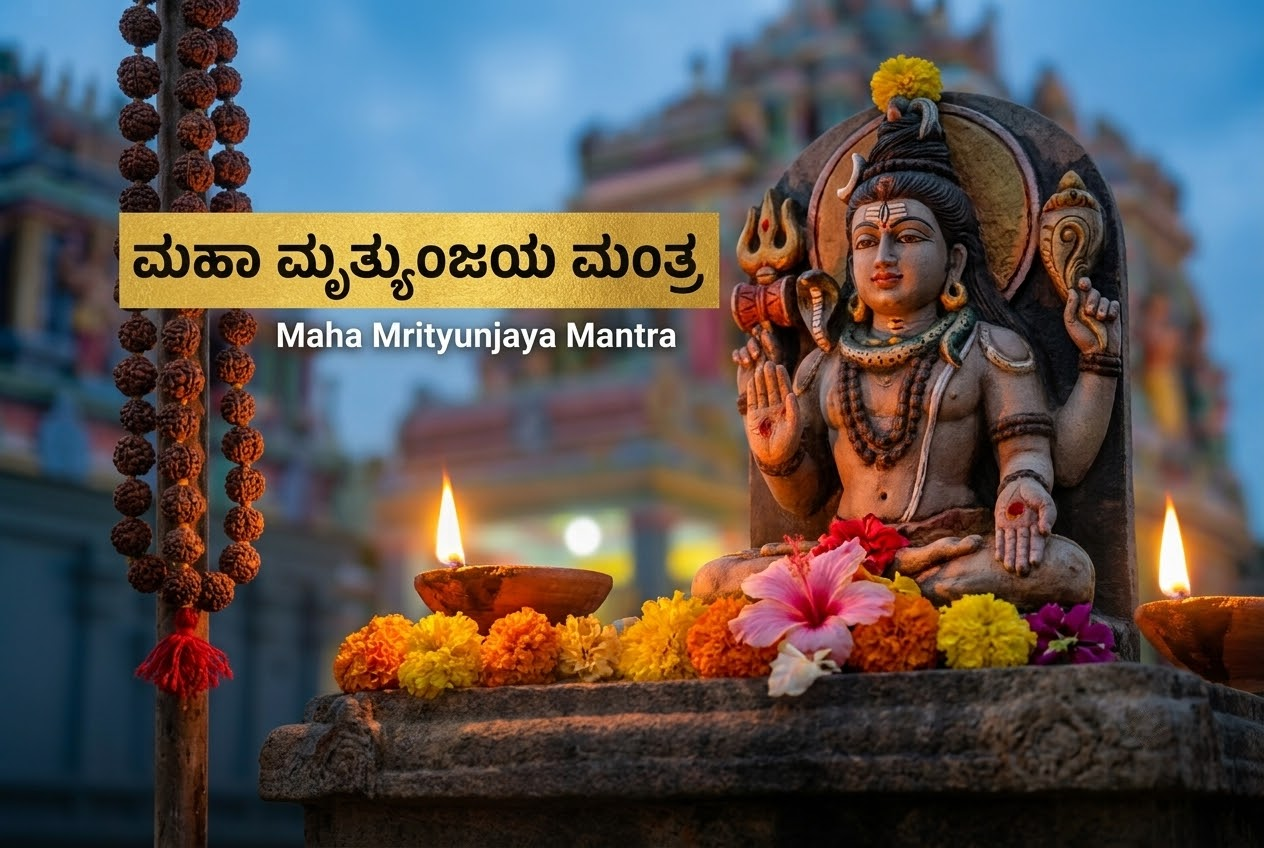
Maha Mrityunjaya Mantra in Kannada with Meaning
Om Trayambakam Yajamahe, popularly known as the Maha Mrityunjaya Mantra, is one of the oldest and most powerful mantras dedicated to Lord Shiva. Millions of devotees across Karnataka chant it every day for health, peace, and protection from untimely death. This guide gives you the mantra in Kannada script, its correct meaning, pronunciation, and the right way to chant it.
What is the Maha Mrityunjaya Mantra
The word Maha means great, Mrityu means death, and Jaya means victory. Together, Maha Mrityunjaya means great victory over death. This mantra comes from the Rig Veda (Mandala 7, Hymn 59) and is also found in the Yajur Veda. It is addressed to Lord Shiva in his form as Rudra, the healer and protector.
The mantra is not chanted to avoid physical death, since death is a natural part of life. It is chanted to overcome the fear of death, to heal from illness, and to seek spiritual liberation, or moksha.
Maha Mrityunjaya Mantra in Kannada
Here is the mantra written in Kannada script for easy reading and chanting:
ಓಂ ತ್ರ್ಯಂಬಕಂ ಯಜಾಮಹೇ ಸುಗಂಧಿಂ ಪುಷ್ಟಿವರ್ಧನಮ್ | ಉರ್ವಾರುಕಮಿವ ಬಂಧನಾನ್ ಮೃತ್ಯೋರ್ಮೋಕ್ಷೀಯ ಮಾಽಮೃತಾತ್ ||
ॐ त्र्यम्बकं यजामहे सुगन्धिं पुष्टिवर्धनम् । उर्वारुकमिव बन्धनान् मृत्योर्मोक्षीय माऽमृतात् ॥
Om Tryambakam Yajamahe, Sugandhim Pushtivardhanam Urvarukamiva Bandhanan, Mrityor Mokshiya Mamritat
Meaning of the Mantra in Kannada
ಈ ಮಂತ್ರದ ಅರ್ಥವನ್ನು ಕನ್ನಡದಲ್ಲಿ ಸರಳವಾಗಿ ಹೀಗೆ ಹೇಳಬಹುದು:
ನಾವು ಮೂರು ಕಣ್ಣುಗಳುಳ್ಳ ಶಿವನನ್ನು ಪೂಜಿಸುತ್ತೇವೆ, ಆತನು ಸುಗಂಧಭರಿತನೂ, ಸಕಲ ಜೀವಿಗಳನ್ನು ಪೋಷಿಸಿ ಬೆಳೆಸುವವನೂ ಆಗಿದ್ದಾನೆ. ಹಣ್ಣಾದ ಸೌತೆಕಾಯಿ ತನ್ನ ಬಳ್ಳಿಯಿಂದ ಸಹಜವಾಗಿ, ಯಾವುದೇ ಬಲವಂತವಿಲ್ಲದೆ ಬೇರ್ಪಡುವಂತೆ, ಆತನು ನಮ್ಮನ್ನು ಮೃತ್ಯುವಿನ ಬಂಧನದಿಂದ ಬಿಡುಗಡೆಗೊಳಿಸಲಿ, ಆದರೆ ಅಮೃತತ್ವದಿಂದ ಅಂದರೆ ಶಾಶ್ವತ ಸತ್ಯದಿಂದ ದೂರ ಮಾಡದಿರಲಿ.
ಸರಳವಾಗಿ ಹೇಳುವುದಾದರೆ, ಈ ಮಂತ್ರವು ಸಾವಿನ ಭಯದಿಂದ ಬಿಡುಗಡೆ ಕೋರುವ ಪ್ರಾರ್ಥನೆ. ಇದು ದೇಹದ ಸಾವನ್ನು ತಪ್ಪಿಸಲು ಬೇಡುವ ಮಂತ್ರವಲ್ಲ, ಬದಲಿಗೆ ಸಾವಿನ ಭಯ ಮತ್ತು ಅಜ್ಞಾನದಿಂದ ಮುಕ್ತರಾಗಿ, ನಮ್ಮೊಳಗಿನ ಶಾಶ್ವತ ಆತ್ಮಸ್ವರೂಪವನ್ನು ಅರಿಯುವಂತೆ ಶಿವನ ಕೃಪೆಯನ್ನು ಕೋರುವ ಮಂತ್ರ. ಹಣ್ಣಾದ ಕಾಯಿ ತನ್ನಷ್ಟಕ್ಕೆ ಬಳ್ಳಿಯಿಂದ ಬೇರ್ಪಡುವಂತೆ, ನಮ್ಮ ಜೀವನವೂ ಭಯವಿಲ್ಲದೆ, ಶಾಂತಿಯಿಂದ ಮತ್ತು ಪಕ್ವತೆಯಿಂದ ಮುಂದುವರಿಯಲಿ ಎಂಬುದೇ ಈ ಮಂತ್ರದ ಆಶಯ
English Meaning:
The literal translation reads: We worship the three eyed Lord Shiva, who is fragrant and who nourishes and strengthens all beings. Just as a ripe cucumber is easily freed from the vine it is bound to, may He free us from the bondage of death, not away from immortality but towards it.
This last line is the most important and most often misunderstood part of the mantra. The Sanskrit phrase "Mrityor Mokshiya Ma Amritat" is not simply asking to be cut off from death. The word "Ma" here does not mean "release me completely," it means "not," so the full sense is "free me from death, but not from immortality." In other words, the devotee is not praying merely to stop dying, since death of the body is unavoidable. The prayer is asking Shiva to loosen the soul's attachment to the fear and illusion of death, so that the eternal, unchanging self within, the atman, remains connected to immortality even as the physical body changes and eventually passes away.
The comparison to a ripe cucumber carries the same idea. A ripe cucumber does not need to be violently pulled off the vine, it separates on its own, naturally, gently, and at the right time, because it has fully matured. The mantra asks that our release from death and suffering happen in the same effortless, mature, and graceful way, rather than through fear, force, or resistance. Shiva is called fragrant and nourishing in the same breath, because his grace is described as something that quietly spreads and supports life, much like fragrance travels without effort and nourishment builds strength slowly over time.
So in a complete sense, this mantra is a prayer for three things together: physical healing and protection from untimely death, freedom from the fear that death naturally brings, and spiritual liberation, so the soul recognises its own immortal, undying nature.
How to Chant the Mantra Correctly
- Choose a clean, quiet space. Sit facing east or north if possible.
- Sit with a straight spine, either cross-legged on the floor or upright in a chair.
- Take a few deep breaths to calm the mind before you begin.
- Chant slowly and clearly, either aloud or silently in the mind.
- Use a rudraksha or tulsi mala with 108 beads to count your repetitions.
- Complete at least one full round (108 times) if possible, or start with 11 or 21 repetitions if you are a beginner.
Frequently Asked Questions
Q. Can beginners chant this mantra without knowing Sanskrit?
A. Yes. You do not need to be fluent in Sanskrit to chant this mantra. Reading it in Kannada script with correct pronunciation is enough. What matters most is sincerity and steady practice, not perfect grammar.
Q. How many times should this mantra be chanted in a day?
A. The traditional number is 108 times, completing one round of the mala. Beginners can start with 11 or 21 repetitions and slowly build up. Consistency every day matters more than doing a large number just once.
Q. What is the difference between the Panchakshari Mantra and the Maha Mrityunjaya Mantra?
A. The Panchakshari Mantra, Om Namah Shivaya, is a short, five syllable mantra used for general devotion and daily worship of Shiva. The Maha Mrityunjaya Mantra is longer, drawn directly from the Vedas, and is specifically chanted for healing, protection from death, and overcoming deep fear. Many devotees chant both, using Om Namah Shivaya for daily practice and the Mrityunjaya Mantra during illness or difficult times.
Q. Can this mantra be chanted for someone else who is unwell?
A. Yes, this is a common practice. Family members often chant this mantra on behalf of a person who is sick, praying for their recovery and peace of mind. It is usually done with a photo or thought of the person in mind, along with a diya or incense.