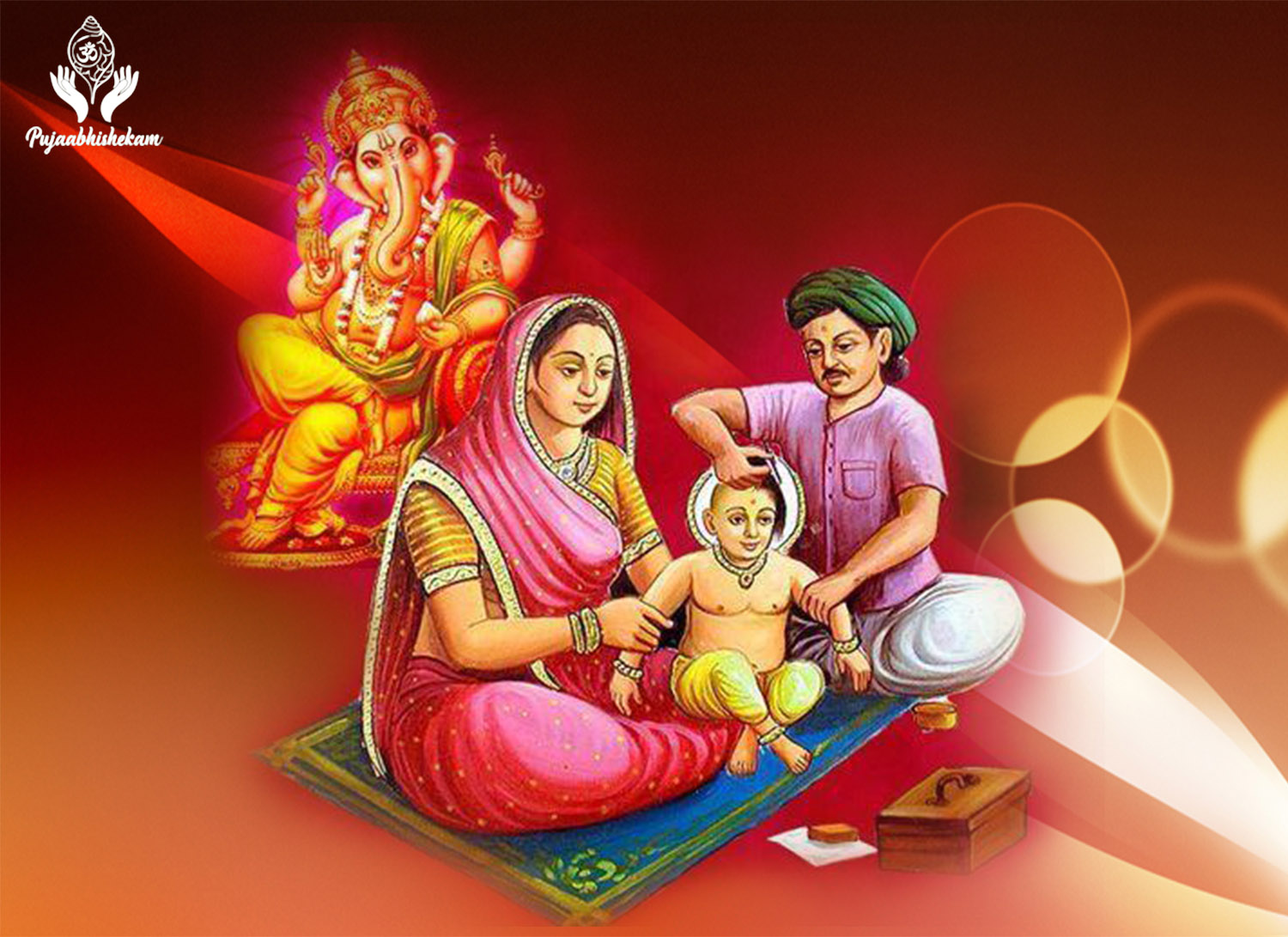
Mundan Puja
WHAT IS MUNDAN?
A Mundan or tonsuring is an important ceremony for Hindus. It is also known as chaula or choodakarana.
Muslims too shave or trim the baby’s hair and some Sikhs perform the kesi dahi ceremony. This is done by putting curd in the hair of the newborn baby boy.
Among Hindus, the mundan is performed during the first or third year of a child’s life. In some regions, the mundan is done only for the male child. However, in most families girls have a mundan too.
WHY IS A MUNDAN PERFORMED?
In most communities a mundan or first haircut is done in the belief that it purifies the child. Many also believe that a mundan:
- rids the baby of his past life’s negativity
- bestows a long life and a good future
- protects the child from the evil eye
- cleanses the child’s body and soul
- helps to keep the baby’s head cool, especially in hot summer months
- helps relieve headache and pains caused by teething
- improves the growth of the baby’s hair
HOW IS THE MUNDAN PERFORMED?
The mundan is performed on a specific date at an auspicious time. The day and time is decided by a priest based on the time of the birth.
A havan or homam is performed by a priest. The mother sits with the child in her lap and faces the west of the sacred fire. The priest shaves off a part of the child’s hair while chanting sacred hymns. After that, the barber shaves off the rest of the hair. In some families, the father performs the initial rite instead of the priest.
The shaven head is washed with holy water (Gangajal). Then a paste of turmeric and sandalwood is applied. It is believed that this mixture cools the head and speeds up the healing of any nicks and cuts. The shaved hair is either offered to a deity or to a sacred river like the Ganga. Your priest may offer another way to dispose of the hair.
In some cultures, a tuft of hair is left on the head (also known as shikha, choti, or bodi). It is said that shikha protects the brain.
WHERE CAN I PERFORM THE MUNDAN CEREMONY FOR MY BABY?
Every family has its own traditions for performing the mundan. Some perform it at home inviting the priest and relatives to bless the child. Others may ask the barber to come home after their priest gives them an auspicious time. These days, many choose to take their children to a salon or beauty parlor. Many salons offer special mundan haircuts.
Some families take their child to a holy place such as a temple, for the first haircut. Others may go to the banks of a holy river like the Ganga.
Select Package
Uttam
The puja include following rituals
- Puja will be conducted by One learned and experienced brahmins.
- Mundan will be done
- Shivlinga Darshan
- Brahmin Bhoj & Dakshina
- Prasadam will be offered.