Kardameshwar Mahadev Temple Varanasi
1. History of the Temple
Most of Varanasi’s famous temples—including the original Kashi Vishwanath—were rebuilt during the Maratha period in the 18th century following destruction during the Gahadavala and Mughal eras. Kardameshwar, however, managed to withstand the test of time and medieval raids due to its location outside the main city center.
Construction Era: Architectural historians date the core structure to the late Gahadavala period (12th century CE), between roughly 1100 CE and 1150 CE.
Archaeological Significance: It is a rare living testament to northern Indian temple architecture from the pre-Sultanate era in Kashi.
Addition over Time: While the primary shrine and shikhara (spire) date to the 12th century, the outer mandapa (pavilion) and platform steps along the adjoining pond (Kardam Kund) saw minor restorations during the 18th century by Maratha patrons.
2. The Story Behind the Temple
The origin of Kardameshwar Mahadev is tied to Hindu mythology and scripture, particularly mentioned in the Kashi Khanda of the Skanda Purana.
The Penance of Sage Kardama
According to sacred tradition, the great progenitor Sage Kardama (father of Sage Kapila) performed severe penance (tapasya) on the banks of the sacred pond to appease Lord Shiva. Moved by his devotion, Lord Shiva appeared before Sage Kardama and granted him a boon.
At the sage's request, Lord Shiva manifested himself at this spot in the form of a Shiva Linga to bless all future devotees. Because Lord Shiva manifested here through the devotion of Sage Kardama, the deity came to be known as Kardameshwar Mahadev ("The Lord of Kardama"). The adjoining pond where the sage performed his ablutions is called Kardam Kund (also known as Kandwa Pokhra).
3. Architecture
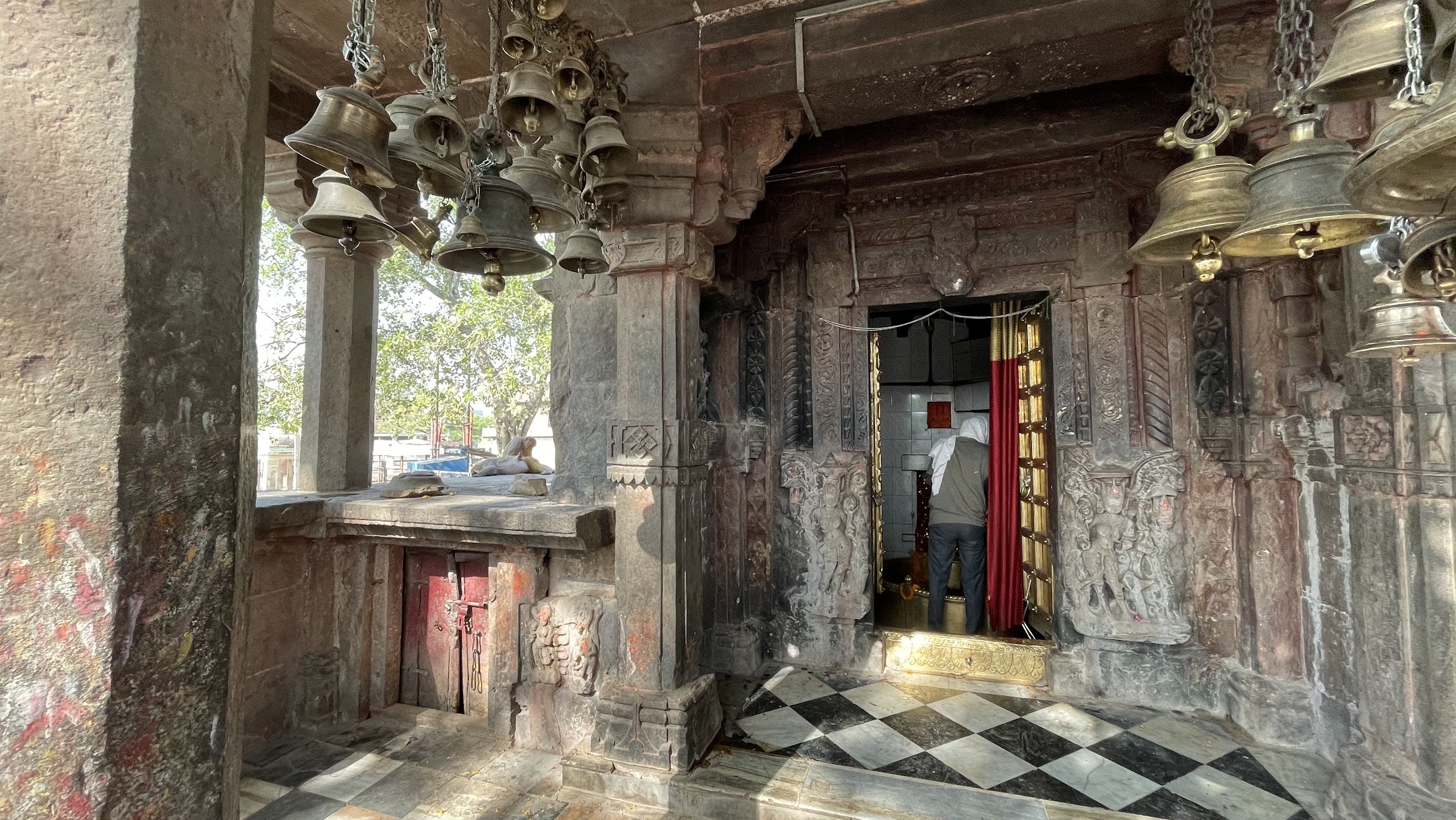
Architecturally, Kardameshwar is a classic example of the Nagara style of temple architecture characteristic of northern India, specifically reflecting the late Gahadavala/Central Indian idiom.
Key Architectural Highlights Structure: The temple features a Garbhagriha (sanctum sanctorum), an Antarala (vestibule), and a small open Mandapa (hall) supported by carved pillars.
Spires (Shikhara): The multi-tiered shikhara is intricately carved with mini-spire replicas (uramangrikas) and geometric mesh patterns (jalas), characteristic of 12th-century craftsmanship.
Exterior Walls (Bhadra Niches): The outer walls display beautiful high-relief stone sculptures of Hindu deities, including Lord Vishnu, Brahma, Durga, Ganesha, and various apsaras (celestial nymphs) and mithuna figures.
Building Material: Built entirely from reddish-yellow Chunar sandstone fitted together using traditional dry-masonry techniques without mortar.
4. Spiritual Significance
Kardameshwar Temple occupies an essential place in the religious geography of Kashi:
First Halt on the Panchkroshi Yatra: The Panchkroshi Yatra is a famous 5-day, 25-mile pilgrimage that circumambulates the sacred boundary of Kashi. Kardameshwar is the very first official night stop (Prathama Pada) along this pilgrimage route, making it immensely important for thousands of pilgrims each year.
Ancestral Rites (Shraddha): Taking a dip in Kardam Kund and offering prayers at Kardameshwar is believed to bring peace to one's ancestors.
Continuous Worship: Unlike ruined monuments, Kardameshwar remains an active, vibrant center of worship where daily rituals have continued uninterrupted for nearly a millennium.
Frequently Asked Questions (FAQs) Where is Kardameshwar Temple located? It is located in Kandwa village, approximately 3 km from Banaras Hindu University (BHU) and about 8 km southwest of the main Varanasi Ghats/Kashi Vishwanath Temple area.
What makes Kardameshwar Temple unique in Varanasi? It is the only surviving 12th-century original stone temple in Varanasi that was not destroyed during medieval invasions, serving as the oldest intact architectural structure in the city.
How is Kardameshwar connected to the Panchkroshi Yatra? It serves as the first of five major resting stops (halts) on the traditional 80 km (50 mile) circuitous pilgrimage around Kashi.
What is the best time to visit? The temple is open year-round. However, visiting during Shivratri, the Hindu month of Shravan (July–August), or during the Panchkroshi Parikrama period offers a deeply vibrant cultural and spiritual experience.