 Pujaabhishekam Blog
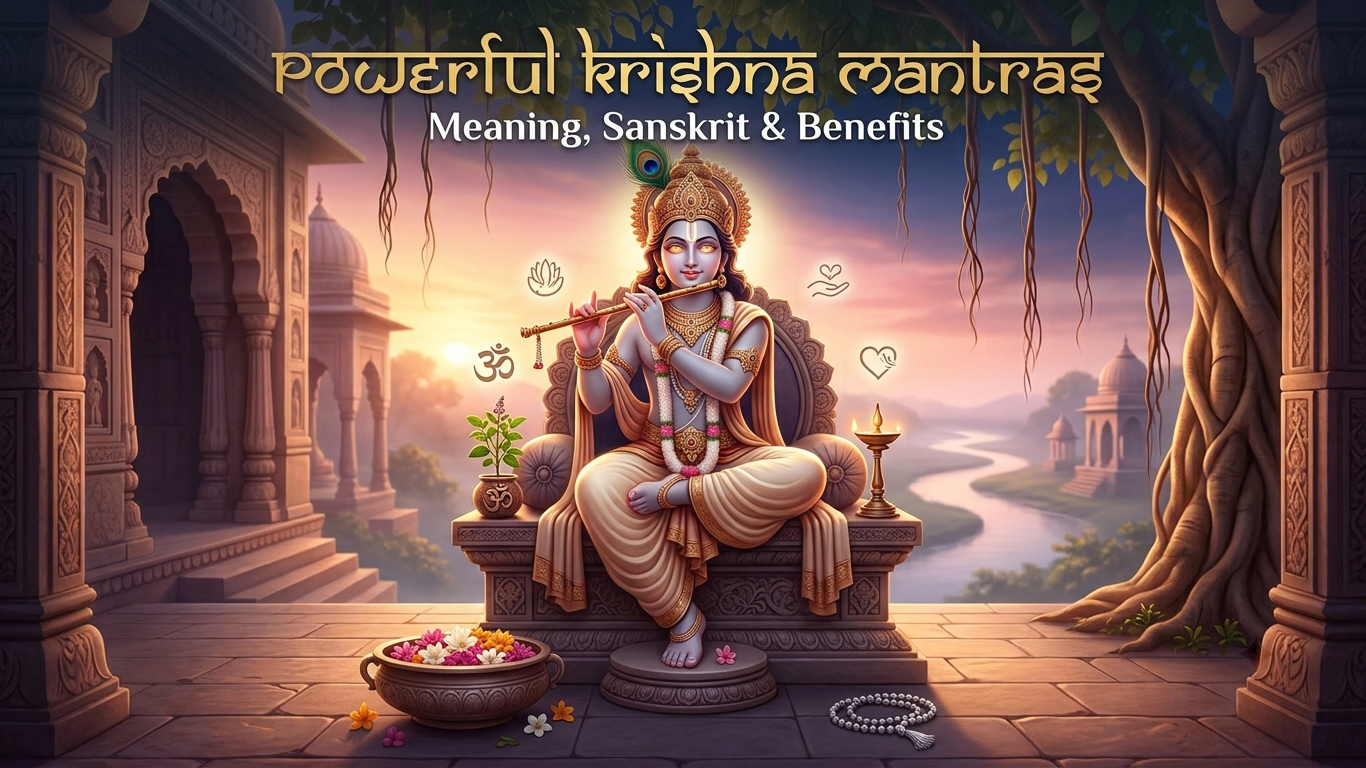
Powerful Mantras of Lord Krishna: Meaning, Sanskrit & Benefits
Lord Krishna, the eighth avatar of Vishnu, is worshipped across India and the world as the embodiment of love, wisdom, and divine protection. Chanting his mantras is believed to bring peace of mind, remove obstacles, and deepen one's spiritual connection. Below are some of the most important and powerful Krishna mantras in Sanskrit, with English transliteration, meaning, and chanting guidance.
1. Hare Krishna Maha Mantra
Sanskrit: हरे कृष्ण हरे कृष्ण, कृष्ण कृष्ण हरे हरे। हरे राम हरे राम, राम राम हरे हरे॥
English Transliteration: Hare Krishna Hare Krishna, Krishna Krishna Hare Hare Hare Rama Hare Rama, Rama Rama Hare Hare
Meaning: Known as the Maha Mantra (the "Great Mantra"), it calls upon Krishna and Rama through the energy of Hara (the divine feminine). It is central to the Bhakti (devotional) tradition, popularized worldwide by the ISKCON movement.
Benefits: Believed to purify the mind, awaken devotion (bhakti), and free the chanter from anxiety and material attachment.
2. Om Namo Bhagavate Vasudevaya
Sanskrit: ॐ नमो भगवते वासुदेवाय
English Transliteration: Om Namo Bhagavate Vasudevaya
Meaning: "I bow to the Supreme Lord Vasudeva (Krishna, son of Vasudeva)." This is a twelve-syllable (dvadashakshari) mantra considered one of the most sacred invocations of Krishna as the Supreme Being.
Benefits: Traditionally chanted for inner peace, protection from negativity, and spiritual liberation (moksha).
3. Krishna Gayatri Mantra
Sanskrit: ॐ देवकीनन्दनाय विद्महे वासुदेवाय धीमहि। तन्नो कृष्णः प्रचोदयात्॥
English Transliteration: Om Devakinandanaya Vidmahe Vasudevaya Dhimahi Tanno Krishnah Prachodayat
Meaning: "Let us meditate on the son of Devaki; let us contemplate Vasudeva. May Lord Krishna illuminate and guide our intellect."
Benefits: A Gayatri-style mantra used for wisdom, clarity, and spiritual awakening, often chanted at sunrise.
4. Om Kleem Krishnaya Namaha
Sanskrit: ॐ क्लीं कृष्णाय नमः
English Transliteration: Om Kleem Krishnaya Namaha
Meaning: "Kleem" is the bija (seed) sound associated with Krishna and attraction/love energy. The mantra translates to "I bow to Krishna, the source of divine attraction."
Benefits: Often used to attract love, harmony in relationships, and positive energy.
5. Achyutam Keshavam Krishna Damodaram
Sanskrit: अच्युतं केशवं कृष्ण दामोदरं, राम नारायणं जानकी वल्लभम्।
English Transliteration: Achyutam Keshavam Krishna Damodaram Rama Narayanam Janaki Vallabham
Meaning: A devotional hymn listing several names of Krishna and Vishnu, expressing surrender to the Lord in his many forms.
Benefits: Commonly sung in bhajans and kirtans to invoke devotion and joy (ananda).
6. Govinda Mantra
Sanskrit: ॐ नमो भगवते गोविन्दाय
English Transliteration: Om Namo Bhagavate Govindaya
Meaning: "I bow to Govinda, the Lord who protects and nourishes all beings (especially cows and the earth)."
Benefits: Chanted at Tirupati and Krishna temples, it is believed to remove sins and bestow prosperity.
How to Chant Krishna Mantras Correctly
- Time: Early morning (Brahma Muhurta) or evening after sunset is considered ideal.
- Posture: Sit facing east or north in a quiet, clean space.
- Mala: Use a Tulsi bead mala for 108 repetitions (one full round, or "jaap").
- Pronunciation: Sanskrit pronunciation matters — chant slowly at first, following an authentic audio source if possible.
- Intention: Chant with devotion (bhakti) rather than mechanical repetition for maximum benefit.
Conclusion
These mantras of Lord Krishna from the widely known Hare Krishna Maha Mantra to the deeply meditative Krishna Gayatri Mantra offer a doorway into devotion, inner peace, and spiritual growth. Whether chanted individually or in a group (kirtan), regular practice is believed to bring calmness, clarity, and a closer connection to the divine.