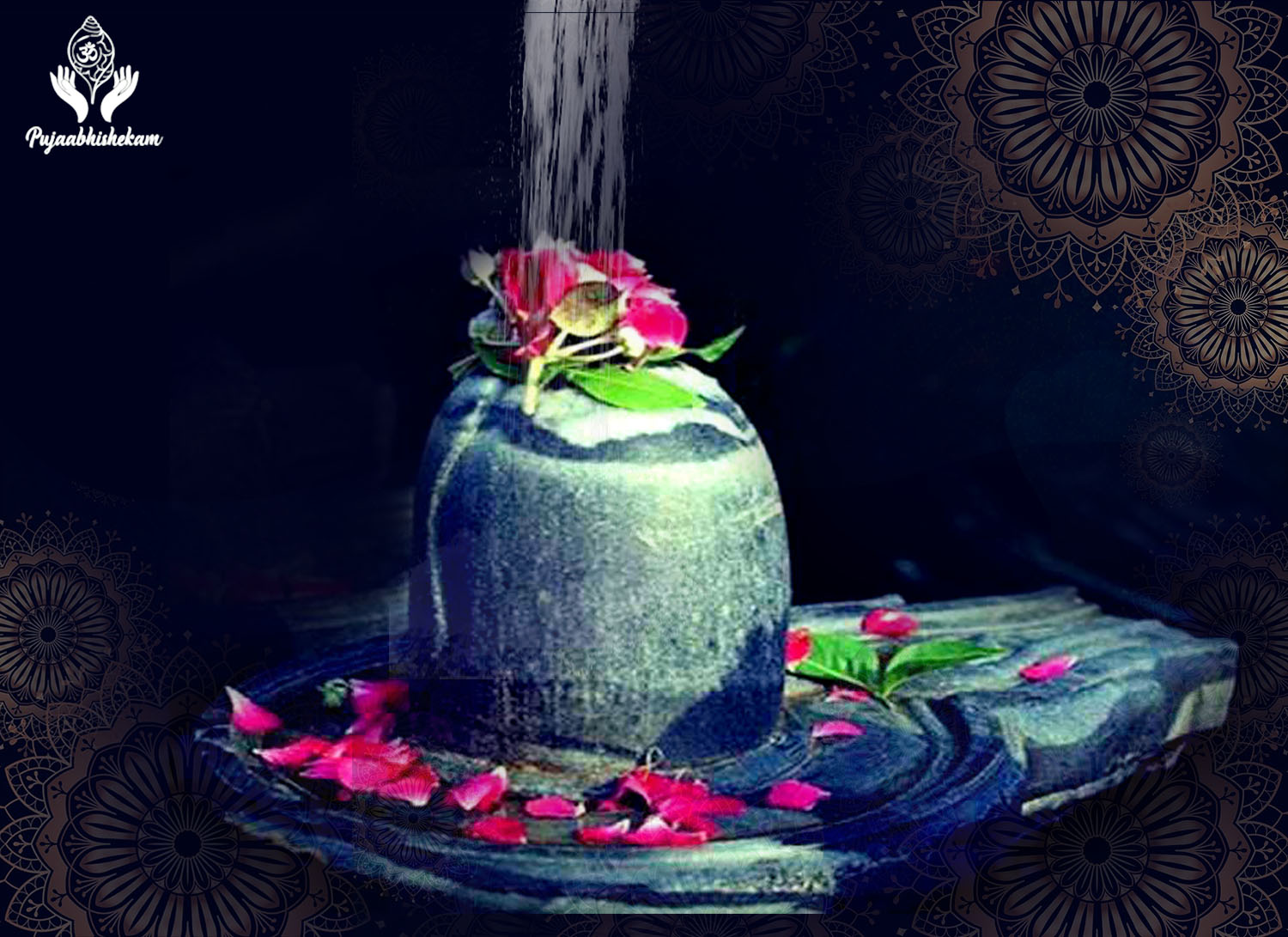
General Puja Jala Abhishek for Special Darshan
Baidyanath Jyotirlinga temple, also known as Baba Baidyanath Dham and Baidyanath Dham is one of the twelve Jyotirlingas, the most sacred abodes of Shiva. It is located in Deoghar in the Santhal Parganas division of the state of Jharkhand, India. It is a temple complex consisting of the main temple of Baba Baidyanath, where the Jyotirlinga is installed, and 21 other temples.
According to Hindu beliefs, the demon king Ravana worshipped Shiva at the current site of the temple to get the boons that he later used to wreak havoc in the world. Ravana offered his ten heads one after another to Shiva as a sacrifice. Pleased with this, Shiva descended to cure Ravana who was injured. As he acted as a doctor, he is referred to as Vaidhya (“doctor”). From this aspect of Shiva, the temple derives its name.
Baidyanatham chithabhoomau’ [sivmahapuran kotirudra samhita] and sivmahapuran satarudra samhita is the ancient verse that identifies location of vaidyanth jyotirlinga. According to which Baidyantham is in ‘chidabhoomi’, which is the ancient name of Deoghar. This states that Vaidyanath jyotirlinga is located at Prajwalika nidhanam (meaning funeral place i.e., chithabhoomi) in the North-Eastern part of the country. Deoghar is far located in east compared to Parli which is in west central part of the country. Also Chidabhoomi indicates that, in olden days, this was a funeral place, where corpses are burnt and post-death ceremonies were performed. This place could have been a center of tantric cults like Kapalika/Bhairava where Lord Shiva is worshipped significantly as smasan vasin (meaning, residing in crematorium), sava bhasma bhushita (meaning, smearing body with ashes of burnt bodies).
While, the Dvadasalinga Smaranam has variation by which, verse is ‘paralyam vaidyanatham’, i.e., Vaidyanatham is in Parli, Maharashtra.
Thus the three temples claiming their shrines as ‘real’ jyotirlinga of Vaidyanath are
- Baidyanath temple at Deoghar, Jharkhand,
- Vaijnath temple at Parli, Maharashtra and
- Baijnath temple at Baijnath, Himachal Pradesh.
JYOTIRLINGA
As per Shiv Mahapuran, once Brahma (the Hindu God of creation) and Vishnu (the Hindu God of preservation) had an argument in terms of supremacy of creation. To test them, Shiva pierced the three worlds as a huge endless pillar of light, the jyotirlinga. Vishnu and Brahma split their ways to downwards and upwards respectively to find the end of the light in either direction. Brahma lied that he found out the end, while Vishnu conceded his defeat. Shiva appeared as the second pillar of light and cursed Brahma that he would have no place in ceremonies while Vishnu would be worshipped till the end of eternity. The jyotirlinga is the supreme partless reality, out of which Shiva partly appears. The jyotirlinga shrines, thus are places where Shiva appeared as a fiery column of light. Originally there were believed to be 64 jyotirlingas while 12 of them are considered to be very auspicious and holy. Each of the twelve jyotirlinga sites takes the name of the presiding deity – each considered a different manifestation of Shiva. At all these sites, the primary image is lingam representing the beginningless and endless Stambha pillar, symbolizing the infinite nature of Shiva.
The twelve jyotirlingas are Somnath in Gujarat, Mallikarjuna at Srisailam in Andhra Pradesh, Mahakaleswar at Ujjain in Madhya Pradesh, Omkareshwar in Madhya Pradesh, Kedarnath in Uttarakhand, Bhimashankar in Maharashtra, Viswanath at Varanasi in Uttar Pradesh, Triambakeshwar in Maharashtra, Baidyanath at Deoghar in Jharkhand, Nageswar at Dwarka in Gujarat, Rameshwar at Rameswaram in Tamil Nadu and Ghushmeshwar at Maharashtra.
IMPORTANCE OF BAIDYANATH TEMPLE
- Baidyanath Dham is the most during the month of Shrawan. During this period, lakhs of devotees visit the temple. Most of them first visit Sultanganj, which is 105 km from Babadham.
- The Ganges flows to the North. It is from this place that the devotees collect water in their kanwars and carry the holy Ganges water, with the kanwars on their shoulders. They walk 109 km up to Baidyanath dham at Babadham reciting Bol Bam on the way.
- On reaching Babadham, the kanwarias first take a dip in the Shivaganga to purify themselves, and then enter the Baba dham, where the Ganges water is offered to the Jyotirlingam.
- This pilgrimage continues during the whole of Shravan Maas for 30 days, during July-August. This is the longest religious fair in the world.
- People from foreign lands also visit Babadham not only during Shravan month but also during the rest of the year.
Select Package
Uttam
The puja include following rituals
- Puja will be performed by One learned and experienced brahmin.
- Jalabhishekam will be done.
- Prasadam will be offered.
Mahaprasadam
The puja include following rituals
- Puja will be conducted by One learned and experienced brahmins.
- Shodshopachar .
- Jalabhishekam
- Prasadam will be offered.