

Mar
14
Pushan is the name of a sun-god to whom some hymns are exclusively addressed, and whose praise at other times is sung in connection with that of Indra and other gods. In these hymns his character is not very clearly defined. He is said to behold the entire universe; is addressed as the guide of travellers, and the protector of cattle. He is called upon to protect his servants in battle, and to defend them as of old. He is invoked in the marriage ceremonial, and asked to take the bride’s hand, to lead her away, and to bless her in her conjugal relations. He is said also to conduct the spirits of the departed from this world to the next. In one text he is called “the nourisher,” as Vishnu in later times was called “the preserver.” By far the greater number of prayers addressed to him seem to regard him as the guide and protector of travellers, both along the ordinary journeys of life and in the longer journey to the other world; and as he is supposed to be constantly travelling about, he is said to know the road by which they have to goThe following is a specimen of the hymns addressed to Pushan in the Rig-Veda:— “Conduct us, Pushan, over our road; remove distress, son of the deliverer; go on before us. Smite away from before us the destructive and injurious wolf which seeks after us. Drive away from our path the waylayer, the thief and the robber. Tread with thy foot upon the burning weapons of that deceitful wretch, whoever he be. O wonder-working and wise Pushan, we desire that help of thine wherewith thou didst favour our fathers! O god, who bringest all blessings, and art distinguished by the golden spear, make wealth easy of acquisition! Convey us past our opponents; make our paths easy to travel; gain strength for us here. Lead us over a country of rich pastures; let no new trouble (beset our) path. Bestow, satiate, grant, stimulate us; fill our belly. We do not reproach Pushan, we praise him with hymns; and we seek riches from the wonder-working god.” “May we, O Pushan! meet with a wise man who will straightway direct us and say, ‘It is this.’ May Pushan follow our kine; may he protect our horses; may he give us food. . . . Come hither, glowing god, the deliverer, may we meet.” In the Purānas Pushan occupies a far less exalted position. It seems almost like a burlesque to see him, who in the Vedas is reverently approached as the giver of good to his worshippers, described as being obliged to feed upon gruel, because his teeth have been knocked out of his mouth. The earliest form of the legend describing this event is found in the Taittiriya Sanhita. Rudra, the name by which Siva was then known, not being invited to a great sacrifice that Daksha, his father-in-law, was celebrating, in his anger shot an arrow which pierced the sacrificial victim. Pushan ate his share, and in doing so broke his teeth. In describing Daksha, an account of this sacrifice will be given. In the “Vishnu Purāna” Pushan appears as one of the Ādityas.

Mar
14
SURYA and Savitri are two names by which the Sun is commonly addressed in the Vedic hymns. Sometimes one name is used exclusively, sometimes they are used interchangeably, and sometimes they are used as though they represented quite distinct objects. It is supposed that Savitri refers to the sun when invisible; whilst Surya refers to him when he is visible to the worshippers. This at any rate gives some reason for the two names being employed, though it may not explain the case satisfactorily in every instance.
Although the hymns in which Surya is addressed are not very numerous, his worship was most common in the olden time, and has continued to the present hour. It is to him that the Gayatri, the most sacred text of the Vedas, is addressed at his rising by every devout Brāhman. Simple in its phraseology, this short verse is supposed to exert magical powers. It is as follows:—
“Let us meditate on that excellent glory of the divine Vivifier; May he enlighten (or stimulate) our understandings.”
As a specimen of the language employed in some of the later writings in reference to this verse, read the following few lines from the Skanda Purāna”:—”Nothing in the Vedas is superior to the Gayatri. No invocation is equal to the Gayatri, as no city is equal to Kasi (Benares). The Gayatri is the mother of the Vedas, and of Brāhmans. By repeating it a man is saved. By the power of the Gayatri the Kshetriya (Warrior caste) Vishvamitra became a Brāhmarsi (Brāhman saint), and even obtained such power as to be able to create a new world. What is there indeed that cannot be effected by the Gayatri? For the Gayatri is Vishnu, Brahmā, and Siva, and the three Vedas.”
With promise of such blessings, it is not to be wondered at that the worship of Surya should continue.
The following translation of hymns from the Rig-Veda gives a fair specimen of the language used in addresses to Surya
“Behold the rays of Dawn, like heralds, lead on high
The Sun, that men may see the great all-knowing god. The stars slink off like thieves, in company with Night, Before the all-seeing eye, whose beams reveal his presence, Gleaming like brilliant flames, to nation after nation. With speed, beyond the ken of mortals, thou, O Sun! Dost ever travel on, conspicuous to all. Thou dost create the light, and with it dost illume The universe entire; thou risest in the sight Of all the race of men, and all the host of heaven. Light-giving Varuna! thy piercing glance dost scan, In quick succession, all this stirring, active world, And penetrateth too the broad ethereal space, Measuring our days and nights, and spying out all creatures. Surya with flaming locks, clear-sighted god of day, Thy seven ruddy mares bear on thy rushing car. With these, thy self-yoked steeds, seven daughters of thy chariot Onward thou dost advance. To thy refulgent orb Beyond this lower gloom, and upward to the light Would we ascend, O Sun! thou god among the gods.”
Surya, as we have already noticed, is regarded as a son of Aditi; at other times he is said to be a son of Dyaus. Ushas (the Dawn) is called his wife, though in another passage he is said to be produced by the Dawn. Some texts state that he is the Vivifier of all things; whilst others state that he was formed and made to shine by Indra, Soma, Agni, and others.
From the character ascribed to Savitri in some hymns, it seems more natural to regard him as the sun shining in his strength, and Surya as the sun when rising and setting. Savitri is golden-eyed, golden- handed, golden- tongued. He rides in a chariot drawn by radiant, white-footed steeds. He illuminates the earth; his golden arms stretched out to bless, infusing energy into all creatures, reach to the utmost ends of heaven. He is leader and king in heaven; the other gods follow him, and he it is who gives them immortality. He is prayed to for deliverance from sin, and to conduct the souls of the departed to the abode of the righteous.
In the Purānic Age, Surya sustains quite a different character. He is there called the son of Kasyapa and Aditi. He is described as a dark-red man, with three eyes and four arms: in two hands are water-lilies; with one he is bestowing a blessing, with the other he is encouraging his worshippers. He sits upon a red lotus, and rays of glory issue from his body. In addition to the daily worship that is offered him by Brāhmans in the repetition of the Gayatri, he is worshipped once a year by the Hindus of all castes, generally on the first Sunday in the month of Māgh; and in seasons of sickness it is no uncommon thing for the low-caste Hindus to employ a Brāhman to repeat verses in his honour, in the hope that thus propitiated he will effect their recovery.
In the “Vishnu Purāna” we find the following account of Surya. He married Sangnā, the daughter of Visvakarma; who, after bearing him three children, was so oppressed with his brightness and glory that she was compelled to leave him. Before her departure, she arranged with Chhāya (Shadow) to take her place. For years Surya did not notice the change of wife. But one day, in a fit of anger, Chhāya pronounced a curse upon Yama (Death), a child of Sangnā’s, which immediately took effect. As Surya knew that no mother’s curse could destroy her offspring, he looked into the matter and discovered that his wife had forsaken him, leaving this other woman in her place. Through the power of meditation, Surya found Sangnā in a forest in the form of a mare; and, in order that he might again enjoy her society, he changed himself into a horse. After a few years, growing tired of this arrangement, they returned in proper form to their own dwelling. But in order that his presence might be bearable to his wife, his father-in-law Visvakarma, who was the architect of the gods, ground the Sun upon a stone, and by this means reduced his brightness by one-eighth. The part thus ground from Surya was not wasted. From it were produced the wonder-working discus of Vishnu, the trident of Siva, the lance of Kartikeya (the god of war), and the weapons of Kuvera (the god of riches).
The “Bhavishya Purāna” says, “Because there is none greater than he (i.e. Surya), nor has been, nor will be, therefore he is celebrated as the supreme soul in all the Vedas.” Again, “That which is the sun, and thus called light or effulgent power, is adorable, and must be worshipped by those who dread successive births and deaths, and who eagerly desire beatitude.” In the “Brahmā Purāna” is a passage in which the sun is alluded to under twelve names, with epithets peculiar to each, as though they were twelve distinct sun-deities:—
“The first form of the sun is Indra, the lord of the gods, and the destroyer of their enemies; the second, Dhata, the creator of all things; the third, Parjanya, residing in the clouds, and showering rain on the earth from its beams; the fourth, Twasta, who dwells in all corporeal forms; the fifth, Pushan, who gives nutriment to all beings; the sixth, Aryama, who brings sacrifices to a successful conclusion; the seventh derives his name from almsgiving, and delights mendicants with gifts; the eighth is called Vivasvan, who ensures digestion; the ninth, Vishnu, who constantly manifests himself for the destruction of the enemies of the gods; the tenth, Ansuman, who preserves the vital organs in a sound state; the eleventh, Varuna, who, residing in the waters, vivifies the universe; and the twelfth, Mitra, who dwells in the orb of the moon, for the benefit of the three worlds. These are the twelve splendours of the sun, the supreme spirit, who through them pervades the universe, and irradiates the inmost souls of men.”
Surya is said to have Aruna (Rosy), the Dawn, the son of Kasyapa and Kadru, as his charioteer.
According to the Rāmāyana, Sugriva, the king of the monkey host which assisted Rāma in his great expedition to regain possession of Vita his wife, was a son of Surya by a monkey. According to the Mahābhārata, the hero Karna also was the son of this deity; and when he was in the form of a horse, he became father of the Asvins, and communicated the white Yajur-Veda.
When speaking of the planets, Surya will be noticed again under the name of Ravi.
Among the many names and epithets by which this deity is known, the following are the most common:—
Dinakara, “The Maker of the day.” Bhāskara, “The Creator of light.” Vivaswat, “The Radiant one.” Mihira, “He who waters the earth;” i.e. he draws up the moisture from the seas so that the clouds are formed. Grahapati, “The Lord of the stars.” Karmasākshi, “The Witness of (men’s) works.” Mārtanda, “A descendant of Mritanda.”

Mar
14
BEFOREVedas “to know;” themselves, speaking hence of the the the term source Vedic Veda of Deities, our signifies THE information it VEDAS.
is necessary that something concerning them. knowledge; and as these be said concerning the The root of the word is vid, books were not written for centuries after they were originally composed, it signifies knowledge that was heard, or orally communicated. The Vedas are not the work of a single person, but, according to popular belief, were communicated to a number of Rishis or saints, who in their turn transmitted them to their disciples. The Seer Vyāsa is styled the arranger, or, as we should now say, the editor, of these works.
The instruction contained in these writings is said to have been breathed forth by God Himself. Other writers teach that it issued from Him like smoke from fire. Sometimes the Vedas are said to have sprung from the elements. The accounts of their origin, though differing in form, agree in teaching that they were the direct gift of God to man; and hence they are regarded with the greatest veneration. They are the special property of the Brāhmans. As early as Manu, the nominal author or compiler of a law book probably not more than two or three centuries later than the Vedas, though some suppose it to have been no earlier than A.D. 500, it was regarded as a grave offence for a single word of these divinely given books to be heard by a man of a lower caste.
The Vedas are four in number; of these the Rig-Veda is the oldest, next in order was the Yajur-Veda, then the Sama-Veda, and last of all the Atharva-Veda. Each of these Vedas consists of two main parts: a Sanhita, or collection of mantras or hymns; and a Brāhmana, containing ritualistic precept and illustration, which stands in somewhat the same relation to the Sanhita as the Talmud to the Law. In these are found instructions to the priests who conduct the worship of the gods addressed in. the hymns. Attached to each Brāhmana is an Upanishad, containing secret or mystical doctrine. These are regarded as of lesser authority than the Mantras and Brāhmanas. For whilst they are spoken of as Sruti, i.e. heard, the Upanishads are Smriti, learned. Though based on the older compositions, if there is any discrepancy between them, the teaching of the later ones is rejected. The Sanhita and Brāhmana are for the Brāhmans generally; the Upanishads for philosophical inquirers. Yet, strange to say, whereas the older portions had, until recent years, been almost entirely neglected, with some parts of the Upanishads there was considerable acquaintance amongst the learned pundits of Benares and other places. In many parts of India not a man could be found able to read and interpret them. Of the Sanhitas, the “Rig-Veda Sanhita—containing one thousand and seventeen hymns—is by far the most important; whilst the Atharva-Veda-Sanhita, though generally held to be the most recent, is perhaps the most interesting. Moreover, these are the only two Vedic hymn-books worthy of being called separate original collections;”
the others being almost entirely made up of extracts from the Rig-Veda. Between the time of the composition of the Rig-Veda and that of the Atharva, considerable changes in the religious faith of the people had come about. The childlike trust of the earlier hymns has disappeared, and the deities now seem more cruel, and there is greater need of propitiatory offerings. Probably the old religion of the people whom they had conquered had begun to tell on that of the Aryans.
The Sanhitas of three of the Vedas are said to have some peculiarity. “If a mantra is metrical, and intended for loud recitation, it is called Rich (from rich, praise) whence the name Rig Veda; i.e. the Veda containing such praises. If it is prose (and then it must be muttered inaudibly), it is called Yajus (yaj, sacrifice, hence, literally, the means by which sacrifice is effected); therefore Yajur-Veda signifies the Veda containing such yajus. And if it is metrical, and intended for chanting, it is called Sāman [equal]; hence Sāman Veda means the Veda containing such Samans. The author of the Mantra, or as the Hindus would say, the inspired ‘Seer,’ who received it from the Deity, is termed its Rishi; and the object with which it is concerned is its devata—a word which generally means a ‘deity,’ but the meaning of which, in its reference to mantras, must not always be taken literally, as there are hymns in which not gods nor deified beings, but, for instance, a sacrificial post, weapons, etc., invoked, are
considered as the devata.1 It should, however, be noticed that the deifying of a “sacrificial post” or a “weapon” is in perfect harmony with the general pantheistic notions which prevailed amongst the people then as now: so that there is nothing unnatural according to their religious ideas in speaking even of inanimate objects as deities. There is little doubt that the Brāhmanas are more recent than the Sanhitas.
The Vedas have not come down to the present time without considerable dispute as to the text. As might have been expected, seeing that this teaching was given orally, discrepancies arose. One account mentions no less than twenty-one versions (Sākhās) of the Rig-Veda; another gives five of the Rig- Veda, forty-two of the Yajur-Veda, mentions twelve out of a thousand of the Sāman-Veda, and twelve of the Atharva-Veda. And as each school believed that it possessed the true Veda, it anathematized those who taught and followed any other. The Rig-Veda Sanhita that has survived to the present age is that of one school only, the Sākala; the Yajur-Veda is that of three schools; the Sāma-Veda is that of perhaps two, and the Atharva-Veda of one only.
“The history of the Yajur-Veda differs in so far from that of the other Vedas, as it is marked by a dissension between its own schools far more important than the differences which separated the school of each [of the] other Vedas. It is known by the distinction between a Yajur-Veda called the Black— and another called the White—Yajur-Veda. Tradition, especially that of the Purānas, records a legend to account for it. Vaisampāyana, it says, a disciple of Vyāsa, who had received from him the Yajur- Veda, having committed an offence, desired his disciples to assist him in the performance of some expiatory act. One of these, however, Yājnavalkya, proposed that he should alone perform the whole rite; upon which Vaisampāyana, enraged at what he considered to be the arrogance of his disciple, uttered a curse on him, the effect of which was that Yājnavalkya disgorged all the Yajus texts he had learned from Vaisampāyana. The other disciples, having been meanwhile transformed into partridges (tittiri), picked up these tainted texts and retained them. Hence these texts are called Taittiriyas. But Yājnavalkya, desirous of obtaining Yajus texts, devoutly prayed to the Sun, and had granted to him his wish—’to possess such texts as were not known to his teacher.'”2 And thus there are two Yajur-Vedas to this day; the Black being considered the older of the two.
As to the date of the Vedas, there is nothing certainly known. There is no doubt that they are amongst the oldest literary productions of the world. But when they were composed is largely a matter of conjecture. Colebrooke seems to show from a Vaidick Calendar that they must have been written before the 14th century B.C. Some assign to them a more recent, some a more ancient, date. Dr. Haug considers the Vedic age to have extended from B.C. 2000 to B.C. 1200, though he thinks some of the oldest hymns may have been composed . B.C. 2400. Max-Müller gives us the probable date of the Mantra, or hymn portion of the Vedas, from B.C. 1200 to B.C. 800, and the Brāhmanas from B.C. 800 to B.C. 600, and the rest from B.C. 600 to B.C. 200.
There is nothing whatever in the books themselves to indicate when they were written. All references in them are to their being given orally, learned, and then again taught audibly to others. Probably for centuries after the art of writing was known in India it was not employed for preserving the sacred books, as in the Mahābhārata those who write the Vedas are threatened with the punishment of hell.

Mar
14
Kalbhairav Temple
KASHI Kashi Vishwanath Temple, Visalakshi Temple and Kaalbhairav Temple – Ghumakkar – Inspiring travel To go towards Kaal bhairav temple, one has to come out of kashi Vishwanath lane atChowk Godowlia road and then via cycle rickshaw or auto rickshaw can go towardsKaalbhairava Temple which is One KM away . It is said that unless you visit Kaalbhairav Temple , Kashi Yatra is incomplete.
Legend
In Kashi Vishwanath legend, when Lord Shiva gets angry on Lord Brahma , he creates a dangerous form called Kaalbhairava . Bhairava beheaded one of Brahma’s ×ve headsand since then Brahma has only four heads. When depicted as Kala Bhairava, Bhairavais shown carrying the decapitated head of Brahma. Cutting off Brahma’s ×fth headmade him guilty of the crime of killing, and as a result, he was forced to carry aroundthe head for years and roam as Bhikshatana, a mendicant, until he had been absolvedof the sin.His head was released when he reached the city of Kashi . From there on helived in the city of Kashi and started guarding it. Hence he is called The Kotwal ofKashi. No one can enter Kashi without the permission of Bhairava.

Mar
14
VARANASI THE OTHER REALITY
Kashi outweighed the heavens because the whole cosmos is contained with in its five kroshas. All that is auspicious increation is here. All that is powerful and sacred is here. All the 330 million gods are here. All knowledge resides here. All tirthas are here. All eight directions radiate from here. All time is born here. Yet, though Kashi forms the heart of the mandala of creation, it is above it. It is lokattara or transcendent. The city sits atop Shiva’s trishul or trident,removed from the world and unmoved by itsrhythms. It is indestructible and in corruptible. While the world around it goes from sin to worse, Kashi lives in a permanent state of purity. It remains rooted in the Krita Yuga orthe Age of Perfection while the rest of creation has degenerated to the Kali Yuga or the Age of Imperfection And when Brahma periodically lets loose pralaya, the floodwaters that destroy all that hecreated, Kashi alone remains unscathed. It sits serene on Shiva’s trishul: ‘When all inert things sink, she, made of consciousness and bliss, does not sink. Were Kashi herself submerged, how could she rescue others?’ It was this salvation which Kashi promises that first drew Shiva to it. Having sliced off Brahma’s fifth head in a paroxysm of anger, the blue-necked god wandered the three worlds for endless aeons, searching for salvation. But to no avail: Brahma’s skull continued to stick to his hand, and the fury Brahmahatya continued to dog his footsteps. It was only when he entered the sacred precincts of Kashi that Brahmahatya melted away and the skull dropped from his fingers. So it was that Shiva made Kashi his own.
And when he needed a suitably luminous home for his new bride, Parvati, it was here that Shiva came to live. He so suffused the city with his presence that the very stones of Kashi became Shiva – Kashi kekankar Shiv Shankar. In Kashi, there is no piece of land, not even oneas small as a til or sesame seed, that does not bear the mark of Shiva, the linga. The god once counted the lingas in Kashi for Parvati and gave up after a hundred billion.
The jyotirlinga or the linga of light, also reside shere, giving Kashi the luminosity to dispelignorance and untruth. Kashi thus is the fount of all knowledge, an attribute commemorated in the seven steps a young Brahmin boy takes toward sKashi during his upanayana or initiation ceremony. Kashi is cosseted not only by Shiva but also by Ganga. Once she touches the earth, the heavenly river flows unwaveringly southwards in her quest for the sea. Kashi is also the most blessed of the sapta purior the seven holy cities that grant moksha or eternal escape from the cycle of life and death. The other six cities, however, can only offer indirect liberation – if you die there, you are reborn for the last time in Kashi. The ultimate guarantee of moksha comes only from dying inKashi, for Kashivam maranam muktiha or death in Kashi is liberation.
And this is because Kashi is thrice -blessed. It isholy in its very existence as the City of Light; it is washed eternally by the heavenly Ganga; andit is only here that Shiva himself whispers the taraka mantra in the ears of the dying. The only time she flows north is at Kashi, when she alters her divine course just to wash the banks of the holy city. Here she is Ganga maiyya,the mother who nourishes the very soul of Kashi, nurturing its life, sanctifying its ritual sand gathering up its dead. Being holy in untold ways, Kashi is then the holiest tirtha or ford across samsara, the river of life. A visit to any tirtha bestows punya on thepilgrim; but a visit to this city bestows spiritual benefit beyond measure. The rites and rituals of dharma get magnified manifold in Kashi .It is said that an upavasa, or fast, for three days in Kashi equals thousands of years of asceticism.
Mar
14
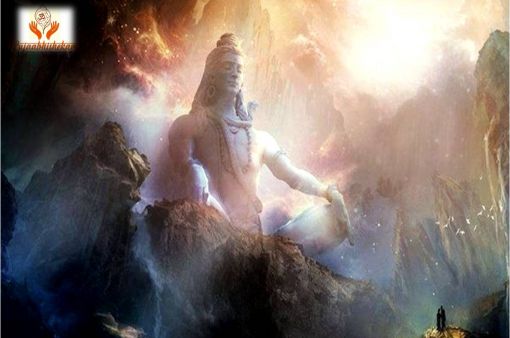
SHIVA THE SUPREME LORD
Citizens of Varanasi will tell you with pride that their city is the one Lord Shiva chose ashis earthly home. For them,this volatile, unpredictable god is not a remote deity to be feared and worshipped. They call him Baba – the benign old man who lives in the temple down the lane. And every morning after bathing in the Ganga, devotees greet their Baba by pouring a pot ofwater from the river on the linga, all the while chanting Shiva prayers of praise. What Brahma creates, Vishnu preserves, but Shiva is both the creator and the destroyer.He provides the inevitable endto everything, so that creation can take place again. When the world becomes full of sin,an enraged Shiva dances the magnif cent tandava to endit all. Then, with Parvati, his female aspect or shakti, he participates in the creation ofa new world.The earliest aspect of Shiva mentioned in the Vedas is that of Rudra, the Angry One.
Scholars think that the sealdiscovered during excavations in the Indus Valley site of Mohenjodaro of a proto-Shivafi gure sitting in the yogic position among animals is that of a Pashupatinath, the Lord of Animals, anothername for Shiva. Over the centuries Shiva rose through the pantheon, ultimatelytaking his supreme place inthe Hindu Trinity.frailties better. And to seek his blessings you have to cometo his special city – the ever-luminous Kashi.
Here, Shiva is everywhere – in the great Vishwanath Temple, at the corner shrine, and under theBanyan tree. Shiva is not perfect: He iseasy to anger, easier to please, prone to impulsive mistakes. It is because of this that heis loved so deeply by his devotees. Somehow, you feel that this many-hued god will listen to your prayers more Shiva’s heavenly home isin Mount Kailash in the Himalayas. There he lives likean ascetic, with long, matted hair and his body covered in ash from cremation grounds. He has three eyes, the third opening when he is angry. Snakes writhe in his hairand around his neck and he wanders the earth carrying his trident, his damru or rattle drum and a begging bowl.
The wandering ascetic, the sadhu, is his human image. Shiva’s mythical association with Varanasi began with his wedding. When he married Parvati, he had to look for a home to live in. Shiva and his bride searched far and wide until their eyes fell on Kashi, a city of truly resplendent beauty.

Mar
14
ASSI GHAT
Assi river, which once markedthe southern boundary ofKashi, has degenerated into aturgid stream. They say Assisprang from this point whenthe warrior goddess Durgadropped her sword or asiwhile battling demons.Assi Ghat is a recommendedpoint to begin boat rides downthe river. The Tulsi Manas andDurga temples are nearby.In the 16th century, the poe tTulsidas wrote his immortalepic Ramcharitmanas in ahouse just above Assi Ghat. A part of the ghat was later named Tulsi Ghat after thepoet and his house and templestill stand here.Just north of this ghat is oneof the most sacred sites ofVaranasi, the Lolarka Kund,a pool dedicated to Surya,the Sun God. They say thesun trembled at this site afteradmiring the beauty of Kashi.Childless women come here tobathe and pray for offspringduring a popular annualfestival in August/September.

Mar
14
Tulsi Das (1552-1625)
The author of the Hindi epic,Ramcharitamanas, Tulsi Dasis generally acknowledgedas the greatest poet of theBhakti movement, thatin the 15th-16th centuriesprotested against Brahminicalorthodoxy. It was in Kashi that hecomposed Ramcharitamanas,the poem that tells the storyof Lord Rama.
Tulsi Das’version of the ancient epicRamayana was written in anidiom the common man couldfollow, and went a long way in popularising the worship ofRama in north India.Tulsi Das, who came toVaranasi as a boy at the ageof twelve, developed for thecity an attachment borderingon adoration. In the Vinaya-Patrika, in fact he hails Kashias the kamadhenu or the wish-grantingcow.Serve with love all life throughKashi.The wishing-cow of all this KaliYuga;It banishes woe, affliction, sin,disease,And it amasses all thingsauspicious. Along the river, go past theAnandamayee Ghat, namedafter Sri Ma Anandamayeethe 20th century saint whoseashram stands above the steps,and the imposing 17th centurypalace of Maharaja Chet Singhthat is over a ghat known as Shivala.

Mar
14
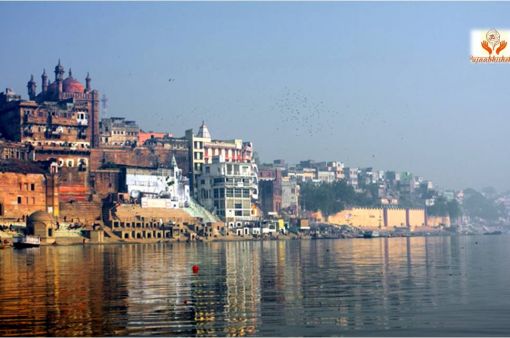
HANUMAN GHAT
Hanuman ghat is whereVallabha, the devotionalteacher of the Krishna Bhakticult, lived during the 15thcentury. Tulsi Das built a Hanuman temple here whichgives the ghat its name. Then come to Harishchandra,a burning ghat on theriverfront named after thelegendary king who chosehonesty above everythingand was reduced to workingas a lowly dom, or scavenger,at the cremation ground.People in this part of the citybelieve that this is the oldest cremation ground in Varanasi,surpassing even MANIKARNIKAGHAT in its sanctity.Going past Bhelupura on the Sonarpura Road is the narrowKedar Gali leading to KedarGhat. The ancient temple of Kedareshwara is especiallyrevered by pilgrims fromsouth India. The temple is also the supposed site of the legendary jyotirlinga.
Mar
14
THE PANCHGANGA GHAT,
In the north of Manikarnika, possesses the power of five mysterious streams that flow symbolically This is the ghat where widows come on Kartik Purnima to light lamps for their dead husbands. This ghat also has the ashrams and mathas of important religious sects like the Ramananda, the Tailangaswami and the Ballabhacharya. In fact, it was at this very ghat that Kabir was initiated into Ramananda’s sect. Even today these institutions are considered important centres of ancient Indian philosophy and religion. into the Ganga . the Dhutpapa (cleansed of sins), the Kirana (sun’s rays), the Dharmanada (river of dharma), the Yamuna and the Saraswati.
The legendary Bindumadhav Temple once stood here. Of the six- feet high idol of Vishnu in this temple, Tulsi Das wrote, ‘Blessed are the eyes of those men who have the sight of you!’ Today the ghat is dominated by the Alamgir Mosque that Aurangzeb built after demolishing the temple.